
Building Steady Hands for Precise Welding Control
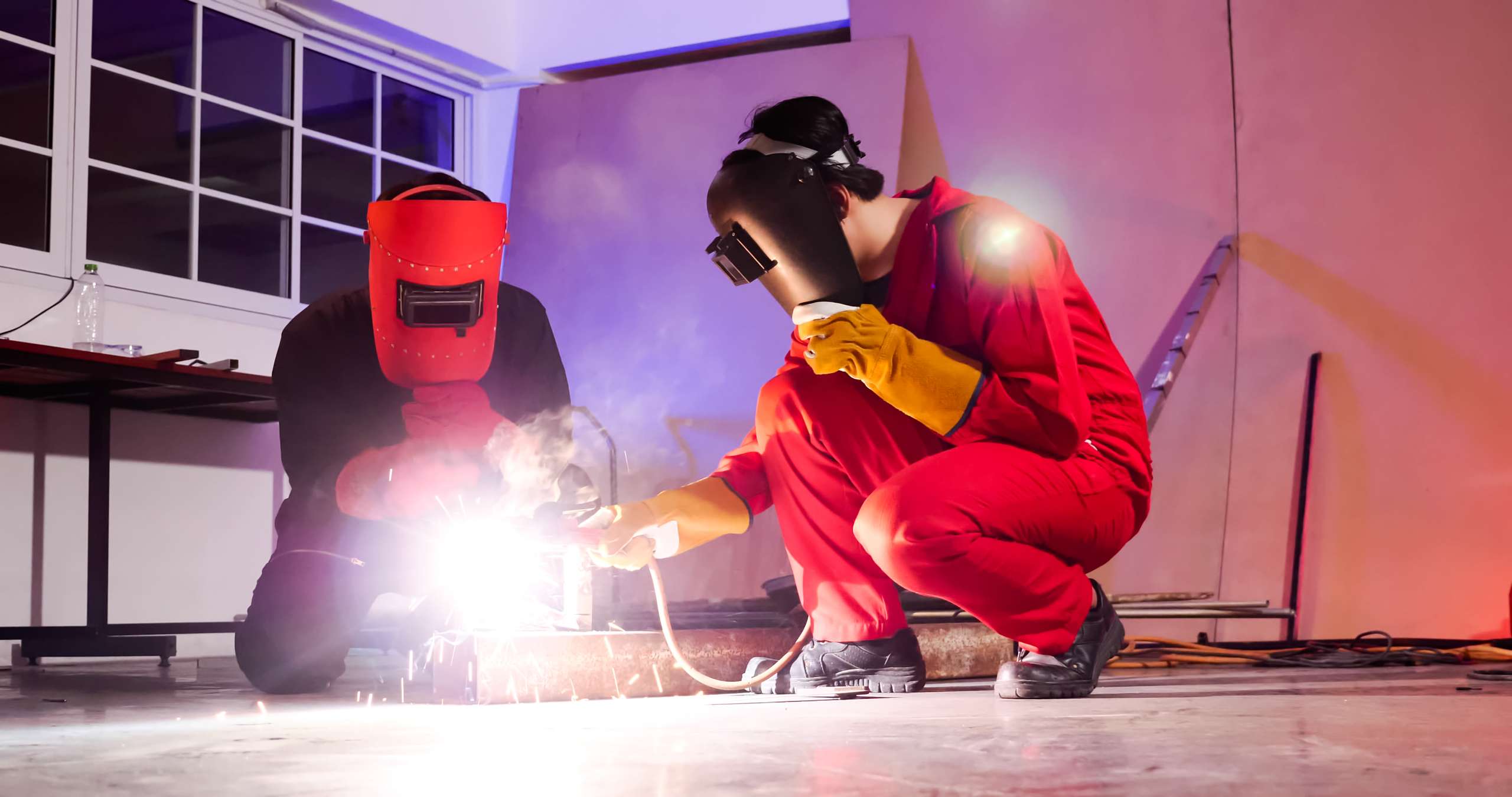
The one thing I hear most from students struggling to control their arc is “I have shaky hands.” The truth is, it’s not how fast you can move your hands, but how steady you can keep them. Any movement in your hands is exaggerated in the arc, and if you’re on a long weld, it will result in a wandering bead. Many new students hold the torch out away from their body using only their wrist and forearm. This results in fatigue and an unsteady hand. Place your pinky finger or side of your hand on the work to help guide you and reduce fatigue. Position your body so you can make the entire weld without having to step to the side or rotate your body in an awkward position.
Grip pressure is something few people consider, but it really makes a difference. If you have a tight grip on the torch, it will amplify any movement in your hand, causing the arc to dance. A loose grip will allow the torch to vibrate in your hand, but will make for a smoother travel. Another common problem is changing the torch angle as you move along the joint. This will also result in a zig-zagging bead. Determine which torch angle will allow you to see into the joint the best and hold that angle until you need to adjust it to see into the joint. Run some practices with the torch off. Just push the torch along the seam to get comfortable with it.
Here’s a simple exercise you can do daily that will improve your hand steadiness. For a couple of minutes a day, use a marker to draw straight lines on a piece of metal or paper. Try to keep the tip as close to the paper as you can, just like you’re welding. Focus on using your shoulder to move your hand instead of your wrist. After a few days, draw circular shapes to improve your motion going around a curve. This is a low-stress exercise that will help improve your coordination without the pressure of making an actual weld.
If you normally have a pretty steady hand, but it seems like you’ve suddenly lost coordination, check your posture. If you’re leaning forward too far, it will restrict your breathing and reduce the freedom of movement in your shoulders. If you’re reaching too far, you’ll be compensating with your body, which will affect the angle. Adjust the height of your work if necessary so the joint is at chest level. Your arms should be able to hang freely without much lift. Another thing to consider is visibility. If you’re straining your eyes to see through glare or smoke, you will not be smooth with your torch. Clean up the area or improve your lighting situation.